Laser Treatments
Q-Switch Laser
High-intensity Q-switched Nd:YAG laser targeting stubborn pigment with nanosecond precision.
- Duration
- 30 minutes
- Downtime
- Mild redness for a few hours; darker spots may flake over a week.
- Results
- Visible from the first session, cumulative across a course.
- Sessions
- 4–6 sessions, 3–4 weeks apart
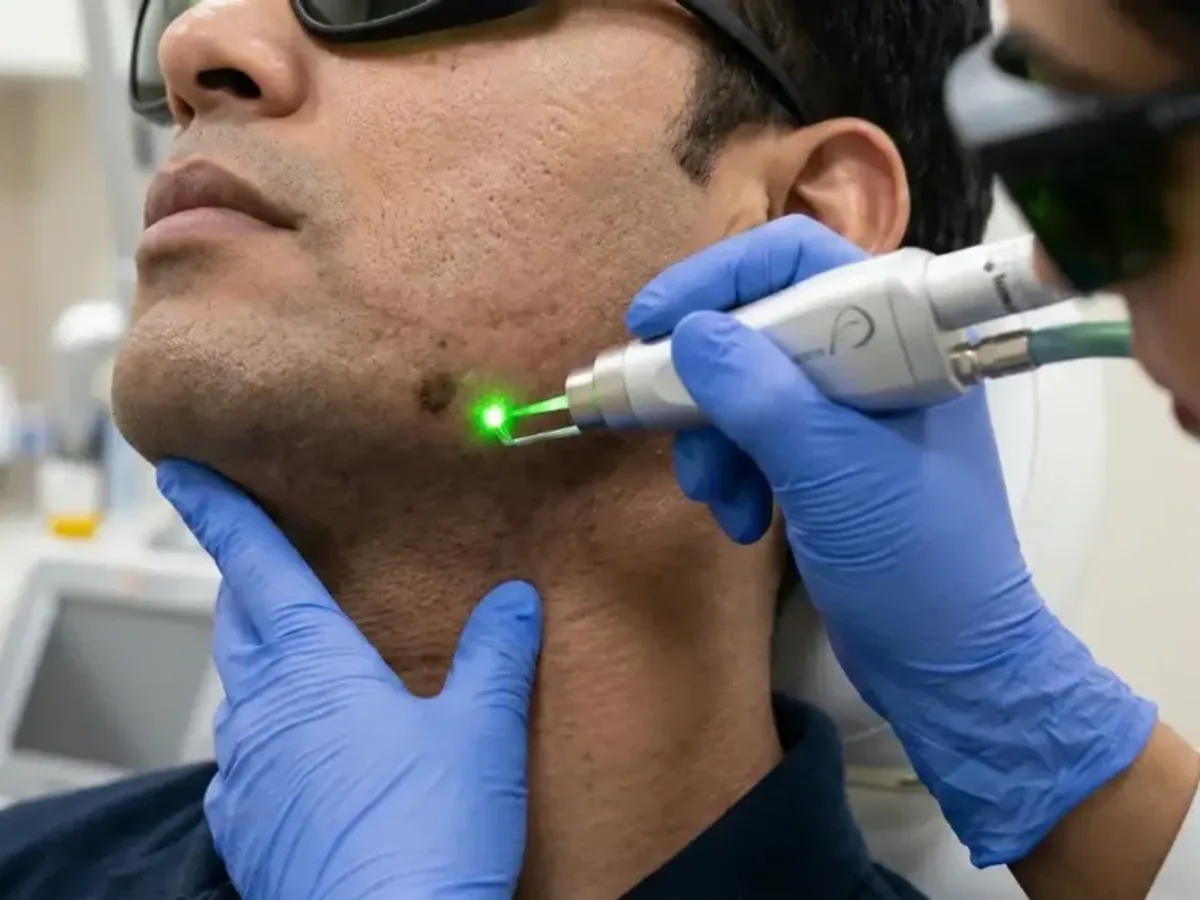
The Q-switched Nd:YAG delivers its energy in nanosecond pulses — short enough that pigment particles absorb the light and shatter before the surrounding tissue has time to heat. That selectivity is what makes it usable on the deeper skin tones common in Pakistan, where a less precise device would risk causing the very pigmentation it was meant to treat.
Pigmentation is rarely a single problem and we assess before we treat. Melasma in particular is driven by hormones, heat and sun exposure, and laser alone will not hold it. Where a laser is appropriate it forms part of a plan that includes topical treatment and rigorous photoprotection.
Benefits
- Effective on stubborn pigment that topicals have not shifted
- Nanosecond pulses reduce the risk of heat injury
- Suitable for deeper skin tones when correctly set
- Also treats lip and underarm pigmentation
Treatment options
Areas and tiers bookable under this treatment. Which is right for you — and what it costs — is confirmed at consultation.
- Full Face Treatment
- Lips Pigmentation
What happens during treatment
Diagnosis
The type and depth of pigment is assessed — this determines whether laser is appropriate at all.
Patch test
A test patch is placed and reviewed before any full treatment is booked.
Treatment
Settings are selected for your skin type and the laser is passed over the affected areas.
Photoprotection
Strict sun protection and a maintenance regimen are set; without these, pigment returns.
Common questions
It can. Melasma is a chronic, relapsing condition driven by hormones, heat and UV. Laser can clear it substantially, but without daily photoprotection and maintenance it will return — we would rather tell you that before you start.
Yes, when the device and settings are correct. A patch test is mandatory, and we treat conservatively across several sessions rather than aggressively in one.