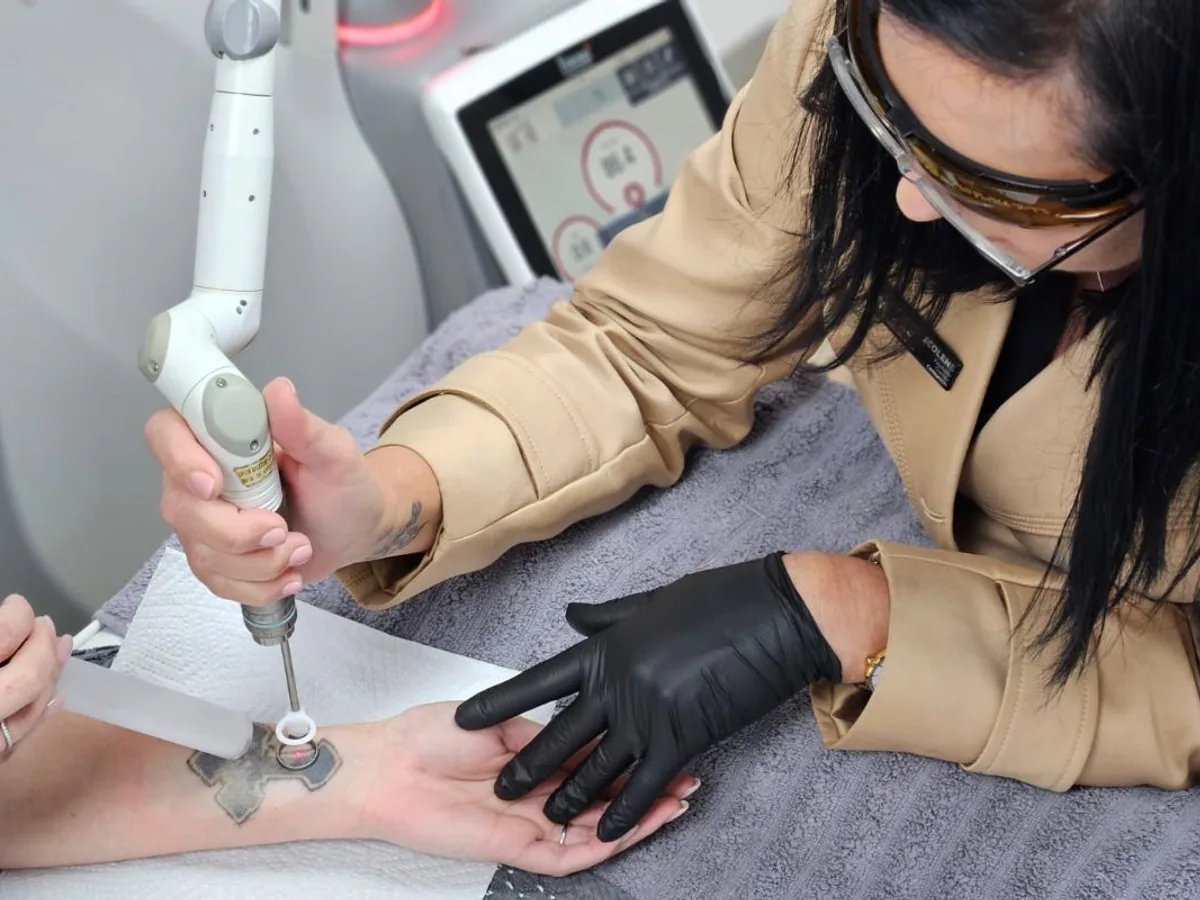
Laser Treatments
Pico Laser
Picosecond laser pulses that break pigment into finer particles with less heat than older devices.
- Duration
- 30 minutes
- Downtime
- Mild redness and warmth for a few hours; treated spots may darken and flake over a week.
- Results
- Visible from the first session, cumulative across a course.
- Sessions
- 3–6 sessions, 3–4 weeks apart
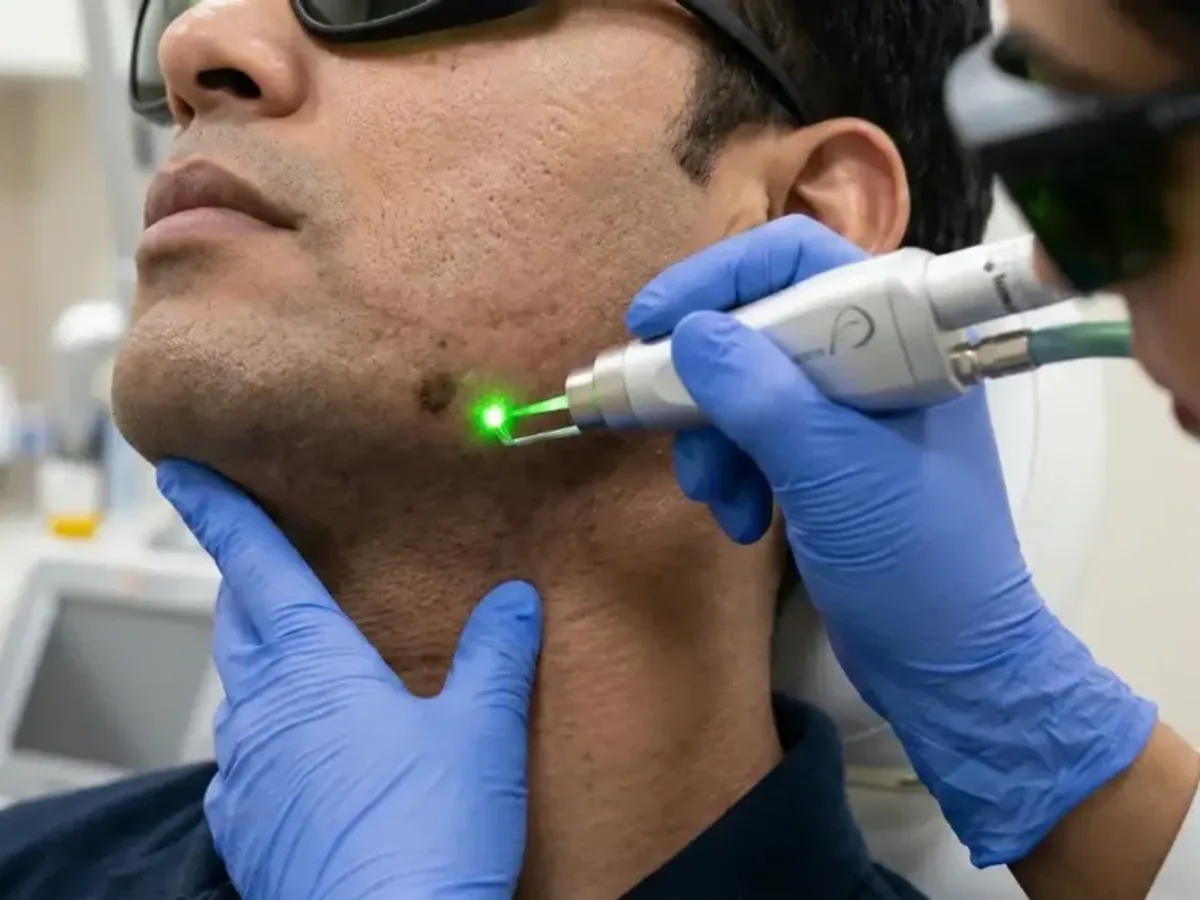
A picosecond laser delivers its energy in pulses a thousand times shorter than the nanosecond pulses of a conventional Q-switched device. The pigment is broken up more by photomechanical shock than by heat, which means smaller particles for the body to clear and less thermal energy passed into the surrounding skin.
That matters most on deeper skin tones, where heat is what provokes post-inflammatory pigmentation — the risk that makes many people wary of lasers in the first place. It does not make the treatment risk-free, and it does not make pigmentation a one-session problem. Melasma in particular is a relapsing condition that laser can improve but not cure, and we will say so before you start rather than after.
Benefits
- Shorter pulses mean less heat delivered to surrounding skin
- Pigment is fragmented more finely, so the body clears it more readily
- Generally fewer sessions than a nanosecond device for the same pigment
- Also used for skin texture and ink, not only pigmentation
Treatment options
Areas and tiers bookable under this treatment. Which is right for you — and what it costs — is confirmed at consultation.
- Pico Laser — Full FacePKR 10,000
What happens during treatment
Assessment
The type and depth of the pigment is identified — this decides whether a laser is the right tool at all.
Patch test
A test area is treated and reviewed before a full session is booked. This is not optional.
Treatment
Settings are chosen for your skin type and the handpiece is passed over the treatment area.
Aftercare
Strict daily photoprotection and a maintenance regimen are set. Without them, pigment returns.
Common questions
Both target pigment. The picosecond pulse is far shorter, so it relies less on heat and more on mechanical shock. In practice that usually means finer pigment fragments, a lower risk of heat-related pigmentation, and often fewer sessions. Which device suits you depends on your skin type and what we are treating, and we will recommend one at consultation rather than selling you the newer name.
Yes, with correct settings and a mandatory patch test. The shorter pulse is part of why it is generally better tolerated on deeper skin tones, but no laser is risk-free and we treat conservatively across a course rather than aggressively in one visit.
Most people describe a light snapping sensation against the skin. Topical numbing is used where the area is sensitive.