Regenerative
PDRN Therapy
Salmon DNA polynucleotides that drive deep tissue repair, hydration and a genuine change in skin quality.
- Duration
- 45 minutes
- Downtime
- Small bumps and pinpoint redness for 6–24 hours.
- Results
- Noticeable from the second session, cumulative across the course.
- Sessions
- 3–4 sessions, 2–3 weeks apart
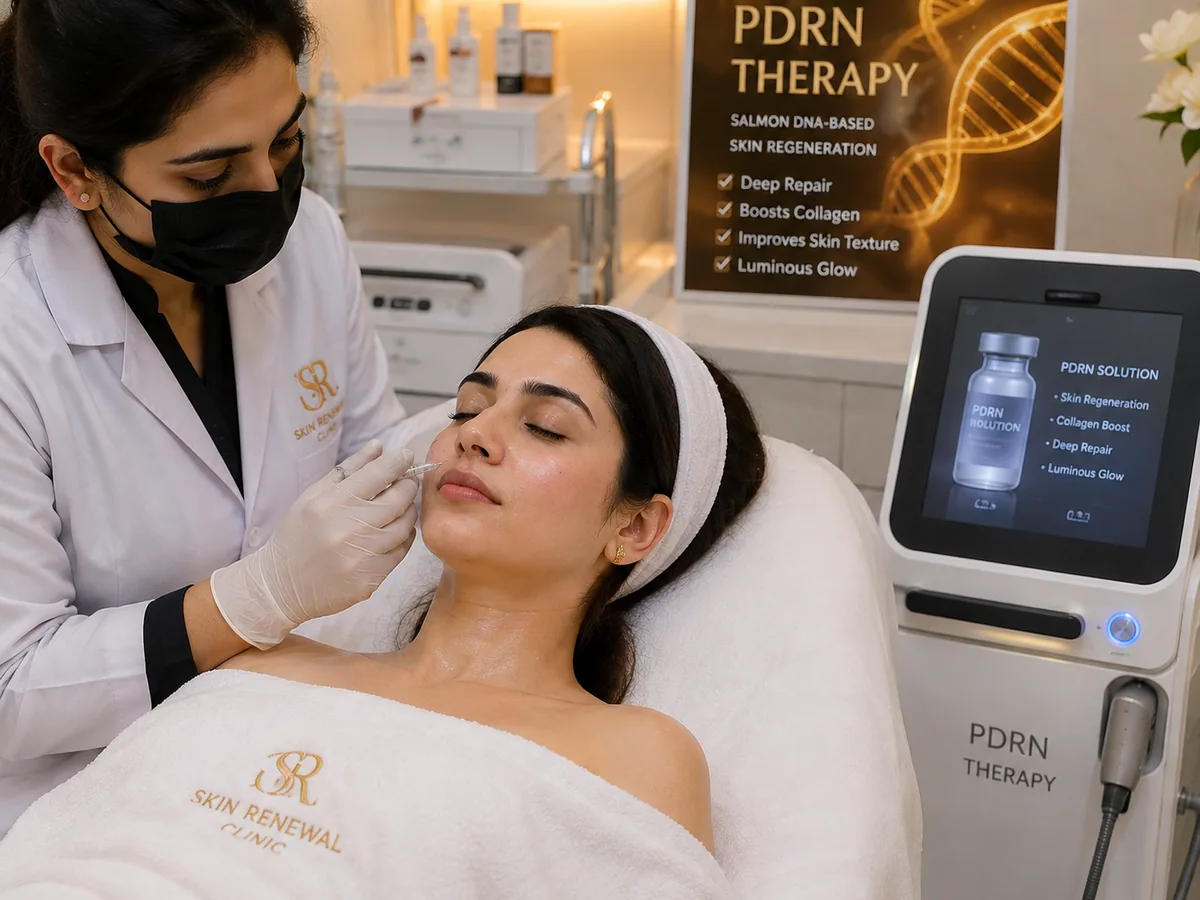
Polydeoxyribonucleotide (PDRN) is a purified DNA fragment derived from salmon, chosen because its sequence is highly compatible with human tissue. Placed into the skin, it activates the A2A receptor pathway — dampening inflammation while encouraging fibroblasts to produce collagen and restore the skin's own hydration.
PDRN is not a filler and adds no volume. It changes the quality of the skin itself: the texture, the fineness of the pores, the crepiness under the eye. It is one of the treatments we most often recommend to patients who arrive asking for filler when what they actually need is better skin.
Benefits
- Improves skin texture, tone and elasticity
- Notably effective for crepey under-eye skin
- Calms inflammation and supports post-procedure healing
- Strengthens the skin barrier and its water-holding capacity
Treatment options
Areas and tiers bookable under this treatment. Which is right for you — and what it costs — is confirmed at consultation.
- Under Eye PDRN
- Skin Booster (Glow)
- Full Face PDRN
What happens during treatment
Skin assessment
We confirm that the concern is one of skin quality rather than volume loss.
Numbing
Topical anaesthetic is applied for 20 minutes, particularly around the eyes.
Micro-injection
PDRN is placed in a grid of small intradermal points across the treatment area.
Course review
Progress is reviewed across the course, usually after the third session.
Common questions
No. PDRN improves the quality and thickness of the skin itself. If the hollowing is structural, that is a separate conversation about filler — and one we approach cautiously in the tear trough.
Tell us at consultation. PDRN is highly purified and protein-free, but we assess every allergy history individually before proceeding.